Startup Marketing Stack by Growth Stage
Match your marketing tools to where your startup actually is, not where you want to be.
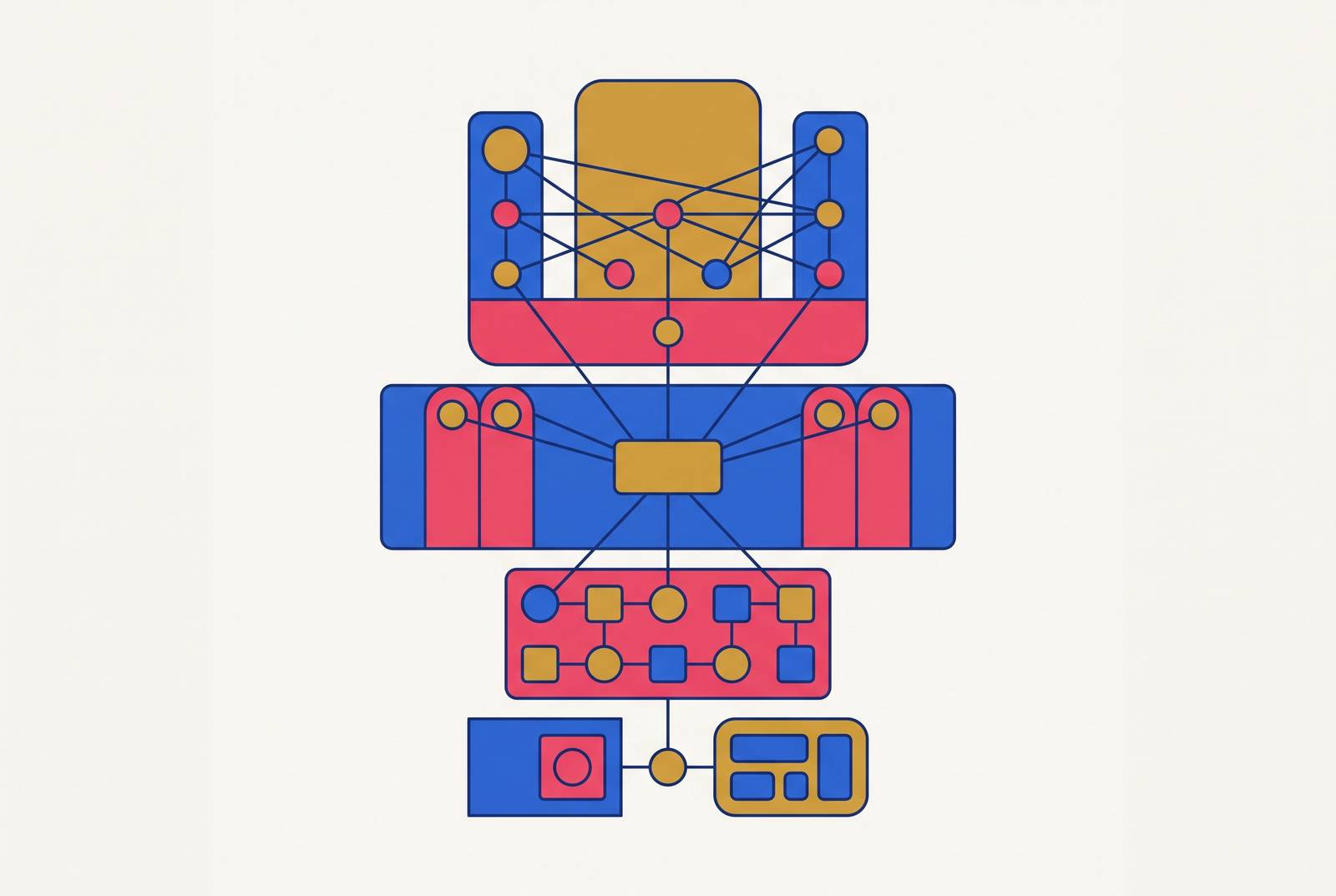
Startup Marketing Stack by Growth Stage. The most expensive mistake a startup can make is running the right marketing tool at the wrong growth stage: this article maps exactly which tools belong in the stack at pre-seed, seed, and Series A, and why the sequence matters as much as the selection.
Why the right tool at the wrong stage costs more than no tool at all
42% of startups die from a lack of market demand, and that's usually not a product problem in disguise, it's a distribution problem wearing a product problem's coat Startup Marketing Strategy 2026: The Founder's Playbook / Averi. The tools a founder buys either speed up that distribution or quietly choke it, depending on when they show up Startup Marketing Strategy 2026: The Founder's Playbook / Averi. The failure mode is buying the right tool at the wrong time: an enterprise CRM before there's a repeatable sales motion to feed it, paid acquisition before anyone's validated who the customer even is, attribution software running reports on a trickle of traffic too small to attribute anything to.
"Stage" gets treated like a funding milestone, a badge you earn at a term sheet signing. It's really three questions a founder should be able to answer honestly at any given moment: do you know who you're selling to, do you have a repeatable way of reaching them, and can you prove the unit economics hold up under pressure? Tools don't answer those questions. They execute an answer that already exists. Buying the tool before the strategy is set means a founder ends up configuring software for a problem they don't have yet (like enterprise CRM before a repeatable sales motion, paid acquisition before a validated ICP, or attribution software before there's enough volume to attribute).
Budgets aren't the constraint people think they are, either. Marketing spend rebounded to 9.4% of company revenue in 2025, a jump of 22% from the year before gtm8020.com. But raw budget size says almost nothing about whether that money is doing anything, because a bloated budget spent at the wrong stage disappears just as fast as a tiny one gtm8020.com. What matters is whether the spend matches the stage. This piece maps that match across three phases: pre-seed, where the job is discovery and manual validation, seed, where the job is building an engine, and Series A, where the job is scaling what the data already proved works.
How tool choices change at each stage
The stakes on this aren't small. Inbound-booked meetings close at around 50%, while outbound-booked meetings close at roughly 10% salesfully.com Startup Traction Metrics That Matter to VCs in 2026 Investor Readiness Checklist. A five-to-one gap like that doesn't just change conversion rates, it changes which tools even belong in the conversation.
Sequencing matters just as much as the choices themselves. ICP first, then positioning, then channels, then instrumentation. Buying a channel tool before the ICP is nailed down means a founder's built a very expensive megaphone pointed at nobody in particular. It's the single most common staging mistake in early-stage marketing, and it happens because tools feel like progress. Setting up a shiny new platform feels like doing something. Sitting in a room defining who the customer actually is feels like homework.
Budget ratios shift hard by stage and function as structure rather than as strict dollar figures. Pre-seed spend is mostly founder time plus lightweight tooling, usually under $2,000 a month in software. At seed, the advice is to put 15 to 25% of the raise toward go-to-market over an 18-month runway, and at least 60% of that should go to headcount rather than paid channels Go-To-Market Strategy for Startups: 90-Day Template Startup Traction Metrics That Matter to VCs in 2026. By Series A, marketing and sales together can represent 40 to 60% of operating expenses, but only because channel-level unit economics justify spending that much Go-To-Market Strategy for Startups: 90-Day Template.
"Instrumentation" is one of those words that sounds the same at every stage but means something completely different each time. At pre-seed, it's a spreadsheet and a tagged URL, nothing fancier. At seed, it's pipeline velocity and CAC broken out by channel. At Series A, it's attribution modeling and burn multiple.
The instinct to chase revenue numbers early is understandable but backwards. Leading indicators, pipeline velocity, activation rate, CAC by channel, tell a founder what's working before revenue ever confirms it. A stack that surfaces those leading indicators early beats one that just shows a pretty ARR dashboard nobody built the muscle to read yet. 68% of B2B companies haven't clearly defined their ideal customer profile, the structural reason so many founders skip straight to dashboards How to Define ICP B2B Framework 2026. Most stacks get assembled before the strategy that's supposed to justify them even exists How to Define ICP B2B Framework 2026.
The pre-seed stack: tools for discovery, not execution
Pre-seed has one job, and it's not scaling. It's learning. Nail the process by hand first, figure out what actually works, and only then think about automating it. The ICP is the only real deliverable at this stage. Everything else in the stack, every tool, every spreadsheet tab, exists to serve that single job.
A complete ICP isn't a one-liner about "mid-market SaaS companies." It has five layers: firmographic fit, technographic signals, behavioral signals, organizational readiness, and negative indicators, the traits that disqualify a prospect before anyone wastes a call on them. Companies that do this work properly report 68% higher win rates than the ones who wing it How to Define ICP B2B Framework 2026. And since 68% of B2B companies haven't done this work at all, most pre-seed stacks are quite literally built on sand How to Define ICP B2B Framework 2026.
So what actually belongs in the toolkit at this stage? Email and calendar, whatever's already sitting on the founder's laptop, no automation required yet. A simple landing page with basic analytics is built to test one positioning statement. Basic search console access, to see what people are actually typing in before anyone commits to a content strategy. And one prospecting tool to pull a list filtered by firmographic criteria, useful only once the ICP work above is actually done.
What doesn't belong: paid acquisition, marketing automation, ABM platforms. All premature, all solving problems that don't exist yet. Free trials of sophisticated software create the illusion of a marketing operation running in the background, when really it's a founder clicking through a fifteen-minute onboarding flow and calling it strategy Go-To-Market Strategy for Startups: 90-Day Template Startup Traction Metrics That Matter to VCs in 2026.
Messaging still matters here even with almost no tooling in place. Wynter's B2B research found that 94% of B2B homepages are functionally interchangeable, meaning swap the logos and nobody would notice rzp.youngurbanproject.com. The pre-seed landing page is where a founder finds out, in real time, whether their positioning passes what's called the 5-second test: can a stranger land on the page and say back what the company actually does rzp.youngurbanproject.com. If not, no amount of tooling downstream fixes that.
The pre-seed stack should cost almost nothing, and that's by design. The money isn't in running campaigns, it's in figuring out exactly who those campaigns should even be aimed at.
The seed stack: building an engine that a Series A investor can read
The job changes completely at seed. The ICP should be validated by now (or at least tested enough to trust), the positioning has survived contact with real prospects, and the mission shifts from "who do I sell to" to "how do I reach them repeatedly and prove it on paper". This is also where the investor conversation becomes very real, very fast: only 33% of seed-funded companies go on to raise a Series A The 2026 B2B SaaS Marketing Playbook from Seed to Series A. The marketing stack is the evidence base behind the traction slide, separating a founder getting a polite "let's stay in touch" from an actual term sheet The 2026 B2B SaaS Marketing Playbook from Seed to Series A.
That traction slide gets scrutinized harder than anything else in the deck. So the stack has to be built from the start to generate the numbers that populate it, which investors spend 3x longer on than any other page Traction Slide Pitch Deck Startup Marketing Strategy 2026: The Founder's Playbook / Averi.
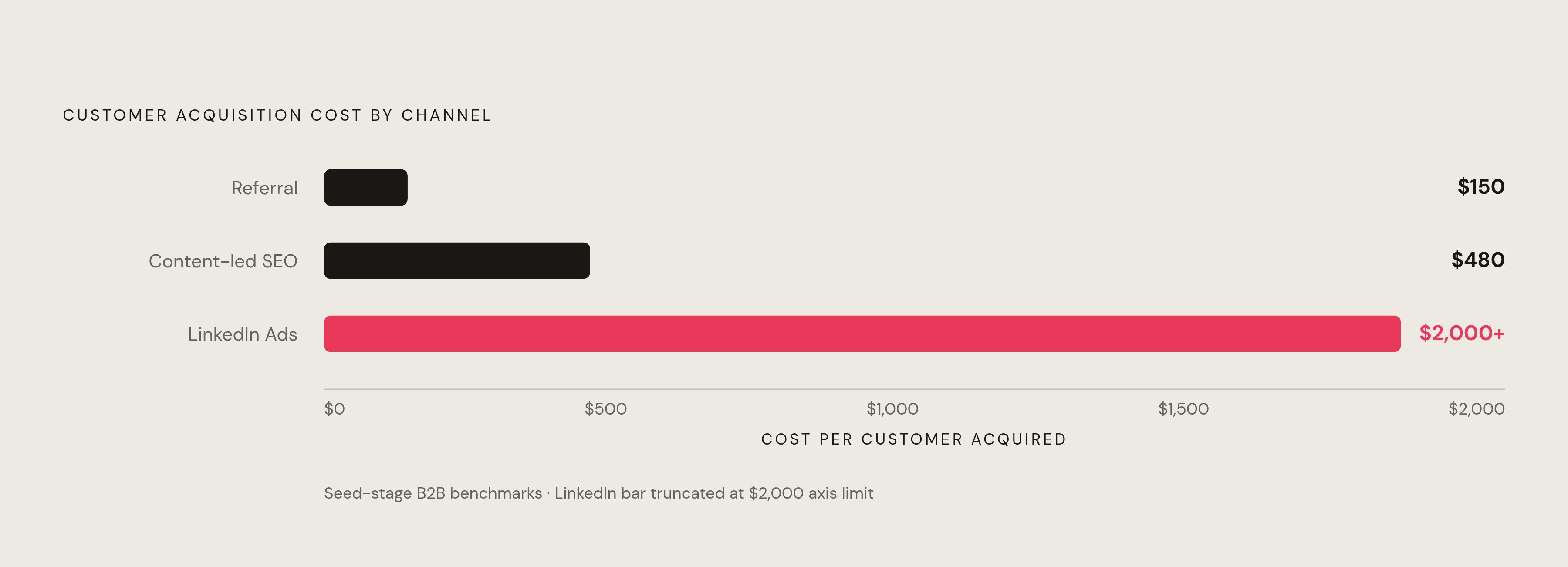
A few categories carry the weight here. A real CRM is configured to track pipeline velocity and sales cycle length. Content and SEO, which is the single highest-ROI channel available to B2B startups right now: content-led SEO runs an average CAC around $480, against $2,000-plus for LinkedIn ads Growth Marketing B2B SaaS Founders 2026. Content also builds an asset that keeps generating leads on its own, while everyone's asleep Growth Marketing B2B SaaS Founders 2026. Email automation, for nurturing inbound leads and running outbound against a signal-qualified ICP list, where cold email reply rates on generic lists run 1 to 5%, but teams working signal-led lists hit 8 to 12% B2B Prospecting 101: ICP Signals & Strategy. Analytics and attribution, meaning tagged URLs and disciplined UTM tracking, set up before the first paid dollar goes out the door, not after. Light ABM tooling or intent data can join the mix, but only if the SLG motion is confirmed and the deal size actually justifies the spend.
The stack needs to surface specific numbers, because these are what investors check. SaaS Capital's 2025 data puts median net revenue retention for venture-backed B2B SaaS at 106%, and falling below 100% tends to end most Series A conversations early Startup Traction Metrics That Matter to VCs in 2026 Investor Readiness Checklist. And there's burn multiple, a framing popularized by David Sacks at Craft Ventures: under 1.5x means the market is pulling the product forward, above 5x means the founder is pushing awfully hard against something that isn't moving Startup Traction Metrics That Matter to VCs in 2026.
What still doesn't belong at seed: enterprise attribution platforms, full ABM suites, paid social running at scale before anyone's confirmed what organic CAC even looks like. Layering paid spend on top of an unproven organic baseline flips the cost structure upside down. And the content built during this stage isn't a one-time push, it compounds. With roughly two years on average between seed and Series A, an article published in month three is still quietly pulling in traffic in month eighteen. That compounding effect is why content earns its place as the anchor channel at seed.
Waitlists, Product Hunt spikes, and social follower counts are not traction, they're confetti Traction Slide Pitch Deck. Investors in the 2024-2025 environment started checking the math behind every number on a deck, and 76% of "no" decisions cite weak traction as the actual reason Traction Slide Pitch Deck. A stack optimized for confetti is a stack optimized for rejection. Seed-stage targets are $5K–$20K MRR with 10–20% month-over-month growth as early traction signals B2B Prospecting 101: ICP Signals & Strategy Startup Traction Metrics That Matter to VCs in 2026 Investor Readiness Checklist. A payback period of 12–18 months is the seed-stage target for CAC by channel, while a CAC payback over 18 months is a deal-breaker at Series A Startup Traction Metrics That Matter to VCs in 2026. An LTV:CAC ratio of 3:1 is the minimum, below which unit economics are unsustainable, while above 5:1 suggests underinvestment in growth Startup Go-To-Market Strategy, The 2026 Playbook.
Where AI fits in the seed-stage stack
AI multiplies a small team's output, it doesn't replace the thinking that decides what the team should be saying rzp.youngurbanproject.com. Feeding a content tool zero brand voice and zero ICP context produces exactly the kind of interchangeable copy Wynter documented in that 94% figure rzp.youngurbanproject.com. Garbage strategy in, polished garbage out.
Used properly, AI earns a real spot in the seed stack. That's not a niche bet but a channel worth building for now rather than later.
Where AI doesn't belong yet: making the positioning call, defining the ICP, or deciding channel allocation. Those decisions need the kind of specialist judgment about brand voice and strategy that no AI tool brings on its own. AI is a legitimate force multiplier, but only in the hands of someone who already knows what the brand is trying to say and who it's trying to reach; buy the AI tools before those foundations exist, and the result is expensive noise dressed up as productivity. A founder running an AI content tool inside a real strategy, one built on a validated ICP and a clear messaging framework, will consistently outperform a founder running the identical tool with none of that groundwork in place. Where AI belongs in the seed stack. Publishing 2–3 pieces of content per week is achievable with 1–2 people when AI handles drafting and human editors handle voice, ICP fit, and accuracy. AI can adapt email messaging to persona-level signals (the CISO vs. the IT Manager vs. the DevOps engineer having different jobs, pains, and gains), without proportional human effort.
The Series A stack: scaling what the data already proved
Series A checks got bigger, and so did the expectations attached to them. The median round in Q1 2025 landed at $7.9 million, and that money is meant to scale what's already working, not to go fund a science fair of new channels From Seed to Series A: Marketing Strategies That Actually Impress Investors. The stack has to produce those numbers at growing scale, without the headcount growing at the same pace Traction Slide Pitch Deck Startup Go-To-Market Strategy, The 2026 Playbook Startup Marketing Strategy 2026: The Founder's Playbook / Averi.
That capital efficiency point isn't abstract. The most successful Series A companies now run with meaningfully fewer employees than similar companies did five years back, and investors reward that efficiency directly, with the marketing function often the clearest place that efficiency appears in.
A handful of things change in the stack itself at this point. Paid acquisition finally earns its keep, not before, because CAC by channel is now known from actual seed-stage data, and the unit economics can support real spend. Marketing automation graduates from simple email sequences into multi-touch, persona-segmented nurture tracks with SQL-to-opportunity tracking built in, and when the list quality is right, that conversion rate runs 20 to 35% B2B Prospecting 101: ICP Signals & Strategy. Attribution modeling stops being optional: with GTM eating 40 to 60% of operating expenses at this stage, every channel has to justify its slice of the budget with real, channel-level unit economics Go-To-Market Strategy for Startups: 90-Day Template. And a proper analytics stack goes in, with dashboards surfacing ARR per employee and burn multiple, the capital efficiency indicators investors increasingly rely on.
Not everything gets swapped out, though. The content engine built at seed keeps compounding and should stay in place rather than get abandoned for paid spend Go-To-Market Strategy for Startups: 90-Day Template Startup Traction Metrics That Matter to VCs in 2026 Growth Marketing B2B SaaS Founders 2026. Referral programs also become a real option now, running at an average CAC around $150, because there's finally an existing customer base large enough to activate Go-To-Market Strategy for Startups: 90-Day Template Startup Traction Metrics That Matter to VCs in 2026 Growth Marketing B2B SaaS Founders 2026. The growth story has to hold up under more scrutiny too: over 80% of investors rank clear traction metrics as a top priority, so the stack needs to generate those numbers automatically, on demand, not get manually stitched together the night before every investor call Traction Metrics Startups Track Before Fundraising.
Whether the seed-stage stack was built right is tested here. At Series A, a founder should be handing an investor a working system, something that runs on its own logic, not narrating a pile of disconnected tactics that happened to produce a few good months. What changes in the stack at Series A.
How to audit your current stack for stage fit
Every tool sitting in the current stack deserves one blunt question: does this solve a problem that exists right now, or one the founder is hoping to have someday? Hope is not a use case.
Run this three-question check, it takes under an hour. Is the ICP defined precisely enough that this tool can actually target it? If not, the tool's premature no matter how capable it is. Is the go-to-market motion, PLG, SLG, or hybrid, confirmed by real data, or is it still just a hunch salesfully.com Startup Traction Metrics That Matter to VCs in 2026 Investor Readiness Checklist? Tools built for one motion are dead weight if that motion hasn't been proven yet. And are the leading indicators, pipeline velocity, CAC by channel, activation rate, actually being tracked before this tool got added to the stack? If not, the tool's running blind, with nothing in place to justify keeping it or cutting it.
A few mismatches appear constantly in this kind of audit. An enterprise CRM configured for a sales team that doesn't exist yet. Paid acquisition running before anyone's established what organic CAC even looks like. Marketing automation sending sequences to a list that hasn't been ICP-filtered. Each one is the same mistake wearing a different outfit: buying execution before the strategy that should have shaped it.
Nothing flashy. Just the right tool, doing the right job, at the moment the business actually needs it. A clean seed-stage stack looks like a CRM tracking pipeline velocity and a content engine producing 2–3 ICP-targeted pieces per week.